
As AI continues to reshape how people search, platforms are evolving just as quickly. At Art Unlimited, we help businesses stay ahead of these shifts—and one of the biggest developments on the horizon is the introduction of ChatGPT Ads. While still in early testing, contextual advertising inside AI conversations signals a major change in how brands connect with customers. Instead of competing for clicks on crowded search pages, businesses will have the opportunity to appear alongside real-time, high-intent conversations. Understanding how this works—and what it means for your marketing strategy—can help you prepare before competitors catch up.
What’s Happening With ChatGPT Ads Right Now
OpenAI has begun introducing ChatGPT Ads as part of a shift in how the platform supports its rapidly growing infrastructure. While subscription models have been the primary revenue stream, the high cost of operating advanced AI systems has pushed the company to explore additional options—particularly advertising for free and lower-cost users. This move allows OpenAI to expand access while maintaining long-term sustainability (OpenAI, 2026).
The rollout will be implemented gradually, with ads appearing in limited environments and to a limited number of advertisers as OpenAI evaluates performance and user experience. This measured approach reflects a focus on maintaining trust while introducing a new monetization model.
Who Will See ChatGPT Ads?
Ad visibility depends on the user’s subscription tier:
- Free users: Ads are being introduced to users accessing ChatGPT at no cost.
- ChatGPT Go ($8/month): This lower-cost plan includes ads as part of the current rollout.
- Paid tiers (Plus, Pro, Enterprise, Business, Edu): These subscriptions remain ad-free, preserving a premium experience (OpenAI, 2026).
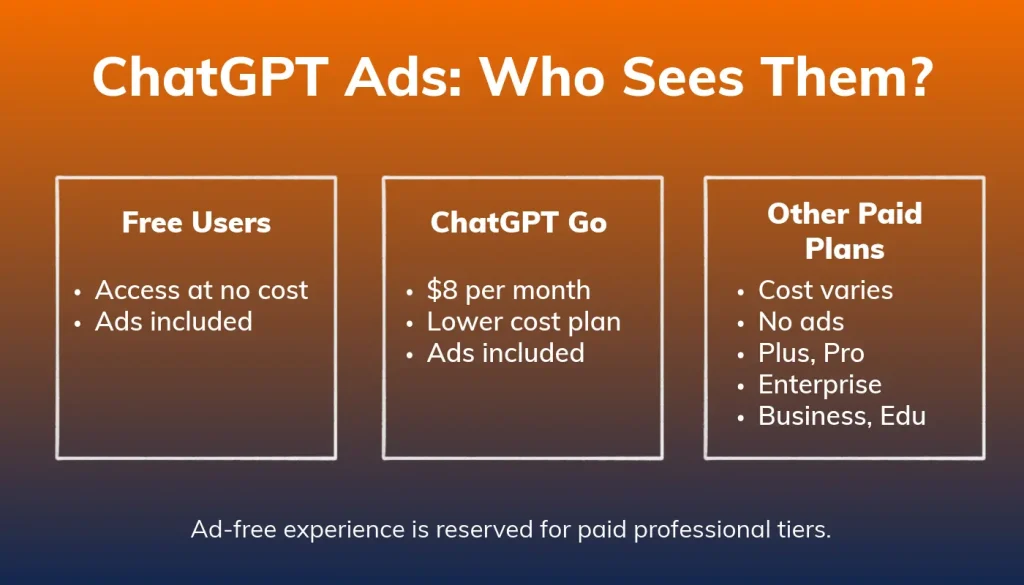
This structure allows OpenAI to keep entry-level access widely available while offering an ad-free option for businesses and professionals who rely on uninterrupted use.
Why This Matters for Businesses
The key takeaway is that ChatGPT Ads are already being implemented—not just anticipated. As availability expands, businesses that understand how to align with AI-driven conversations will be better positioned to capture attention.
Rather than waiting for a full advertising platform to launch, now is the time to refine your messaging, strengthen your content, and prepare for a future where visibility happens directly inside AI conversations.
What Are ChatGPT Ads and How Do They Work?
ChatGPT Ads are a new form of contextual advertising designed to appear alongside AI-generated responses. Unlike traditional ads that rely heavily on keywords or browsing history, these ads are triggered by the intent of a user’s conversation.
For example, if someone asks about the best CRM for contractors, a relevant ad for a CRM platform may appear below the response. These ads are clearly labeled and separated from the AI’s answer, ensuring that the integrity of the response remains intact.
This approach focuses on relevance over volume. Rather than interrupting the user experience, ads are designed to feel like a natural extension of the topic being discussed—making them more helpful and less intrusive.
Are ChatGPT Ads Different From Google or Social Ads?
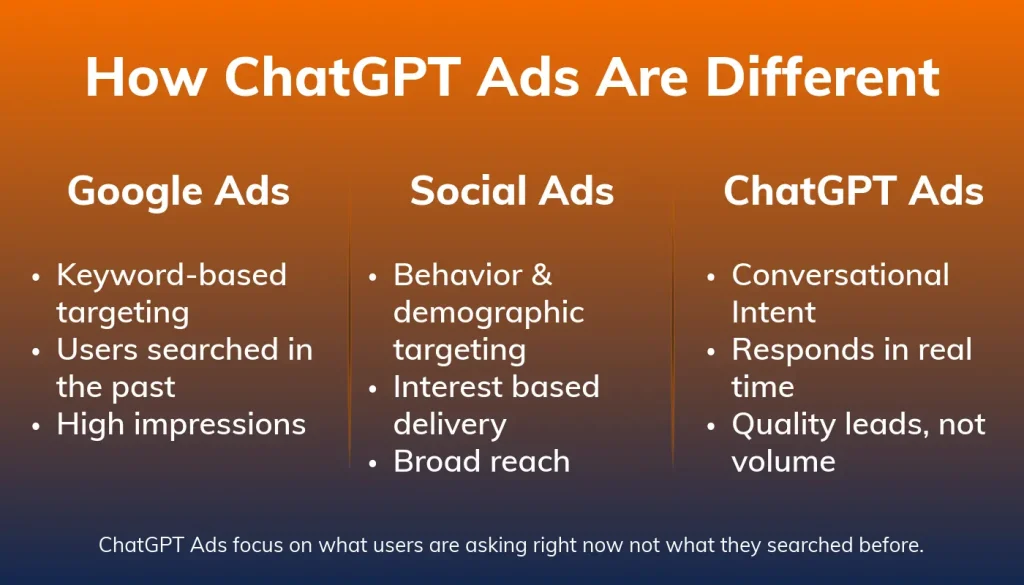
Yes, and the difference is significant. Traditional platforms like Google Ads rely on keyword bidding, while social media ads are often based on user behavior and demographics. ChatGPT Ads shift the focus to conversation intent.
Instead of targeting what users searched in the past, these ads respond to what users are actively asking right now. This creates fewer impressions but much higher-quality opportunities, especially for businesses that rely on trust and informed decision-making.
Why Is ChatGPT Moving Toward Contextual Advertising?
The rise of AI-driven search has created new expectations. Users now want direct answers, not just links. As platforms like ChatGPT deliver more value upfront, they also require sustainable ways to support the cost of advanced AI infrastructure.
Contextual advertising offers a balanced solution. It allows platforms to generate revenue while maintaining a strong user experience. OpenAI has emphasized that ads will not influence the content of responses, helping preserve trust while introducing new opportunities for businesses.
How Will Ads Be Shown to Users?
Ads will primarily appear for free and lower-cost users, such as those on entry-level plans. Higher-tier subscriptions are expected to remain ad-free.
Importantly, ads will not interrupt conversations. Instead, they will appear in designated, labeled areas—typically below responses—making it clear what is paid content and what is organic. This transparency is key to maintaining user confidence in AI-generated answers.
How ChatGPT Ads Will Likely Work for Businesses
While a public ad platform is not yet available, the direction is clear. Businesses should expect a system that prioritizes intent over volume, with a focus on delivering the right message at the right moment.
Rather than bidding on broad keywords, advertisers will likely target categories, topics, or user intent signals. This creates a more focused and strategic approach to advertising.
Can Businesses Choose Where Their Ads Appear?
In the early stages, ad placements are limited and likely managed through controlled rollouts or partnerships. However, future versions may include more advanced controls, allowing businesses to align ads with specific industries, questions, or user needs.
This shift will require a more thoughtful approach to messaging. Ads will need to be informative, relevant, and aligned with the conversation—not disruptive or overly promotional.
What This Means for Your Marketing Strategy
The introduction of ChatGPT Ads doesn’t replace your current strategy—it expands it. To succeed in this new environment, businesses must combine traditional digital marketing with AI-focused visibility.
This includes maintaining strong SEO foundations while adapting to how AI platforms interpret and deliver content.
Will SEO Still Matter?
Absolutely. SEO remains the foundation for visibility, even in an AI-driven landscape. AI models rely on high-quality, well-structured content to generate answers. Without strong SEO, your business may not even be considered in those responses.
At the same time, strategies like AEO (Answer Engine Optimization) and GEO (Generative Engine Optimization) are becoming more important. These approaches focus on making your content easier for AI to understand, summarize, and recommend.
Who Benefits Most From ChatGPT Ads?
Industries that rely on trust, research, and higher-value decisions are likely to benefit the most. This includes contractors, home services, SaaS providers, and professional services.
Because these ads appear during active research, they connect businesses with users who are already evaluating options—not just browsing.
Can Small Businesses Compete?
Yes, and in many cases, they may have an advantage. Since ChatGPT Ads prioritize relevance over budget size, smaller businesses with clear positioning and strong messaging can compete effectively.
This levels the playing field compared to traditional ad platforms, where larger budgets often dominate visibility.
Cost, Performance, and ROI Expectations
While official pricing models have not been released, early expectations suggest a structure similar to pay-per-click or impression-based systems. However, the real difference lies in performance.
Because these ads are tied to high-intent conversations, they may generate fewer clicks—but more qualified leads.
How Will Success Be Measured?
Metrics will likely include clicks, engagement, and conversions, but the true value will come from lead quality. Businesses should focus less on volume and more on outcomes—such as booked appointments, inquiries, and closed deals.
This shift encourages a more strategic approach to advertising, where quality outweighs quantity.
User Experience, Privacy, and Trust
One of the biggest concerns around ChatGPT Ads is whether they will impact trust. OpenAI has addressed this by ensuring ads are clearly labeled and separate from AI-generated responses.
Additionally, user data is handled with privacy in mind. Conversations are not sold to advertisers, and users can control ad personalization settings.
Can Users Opt Out of Ads?
Users on higher-tier plans will continue to have an ad-free experience. For others, options to manage or limit ad personalization are expected to be available, helping maintain a balance between relevance and privacy.
What the Future of AI Advertising Looks Like
This is just the beginning. As AI platforms continue to evolve, contextual advertising is likely to expand across multiple tools and ecosystems.
For businesses, this represents a shift in how customers discover and evaluate services. Instead of browsing multiple websites, users are increasingly relying on AI to guide decisions.
What Should Businesses Do Now?
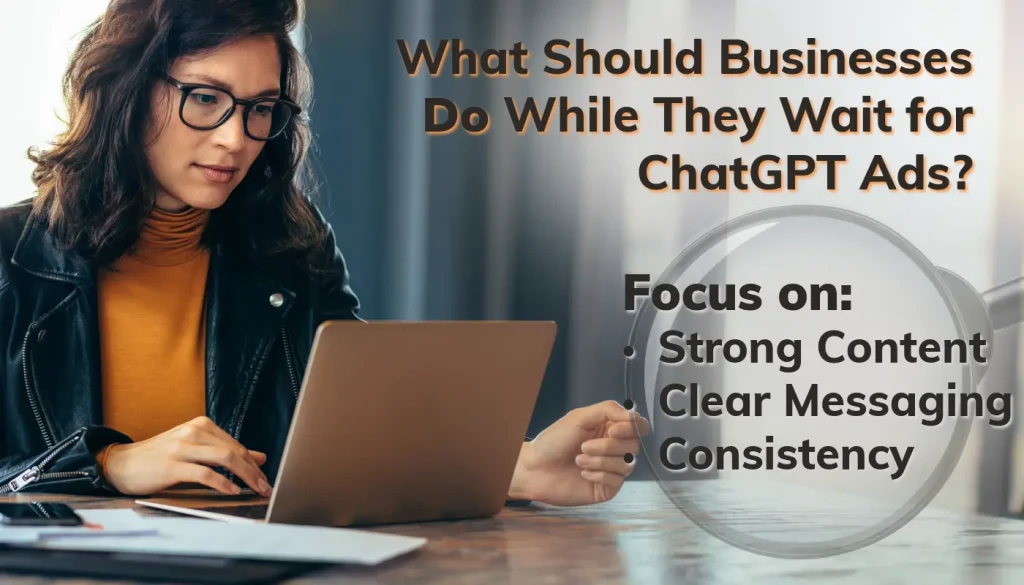
Preparation starts with your current digital presence. Strong content, clear messaging, and consistent positioning will play a critical role in both organic visibility and future ad performance.
Businesses that invest in these fundamentals now will be better positioned to take advantage of new advertising opportunities as they become available.
Stay Ahead of the Shift With Art Unlimited
The introduction of ChatGPT Ads marks a turning point in digital marketing. As AI continues to shape how people search, the businesses that adapt early will have a clear advantage.
At Art Unlimited, we help contractors and service-based businesses navigate these changes with confidence—from SEO and AEO strategies to preparing for emerging platforms like AI-driven advertising.
If you’re ready to position your business for what’s next, let’s start the conversation.
Sources:
OpenAI. (2026). Ads in ChatGPT.https://help.openai.com/en/articles/20001047-ads-in-chatgpt